
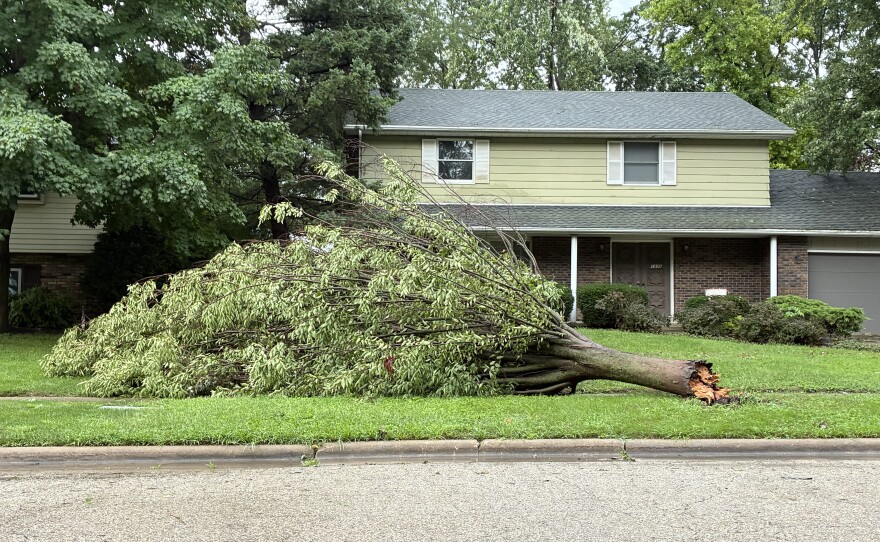

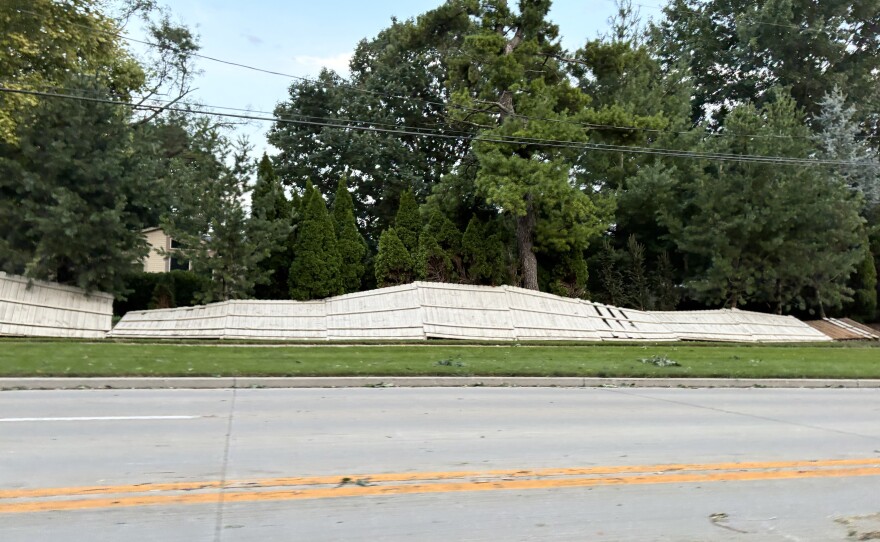
A severe storm system that damaged buildings, downed trees and left thousands without power in Bloomington-Normal on Thursday largely spared the Tri-County region.
Jason Marks, director of emergency management and preparedness for Peoria County, said the storm produced a lot of rain locally, but not much more.
“What we’ve been made aware of here is, no significant damage has been reported to us,” said Marks. “We’ve observed some flooded roads and some branches as we’ve been traveling throughout the community, but we have not experienced nearly the damage that McLean County has experienced.”
Similarly, Kent McCanless from the Woodford County EMA reported “just a lot of rain,” while Tazewell County EMA director Dawn Cook said the thunderstorm’s impact was relatively minimal.
“We had some power outages, a few power poles down, but nothing like McLean County,” she said, adding a flash flood warning issued by the National Weather Service in Lincoln expired as of 10:15 a.m. “We have some minor flooding in some random areas, but we’re expecting those waters to recede soon.”
The storm knocked out power for more than 24,000 customers across McLean County and produced significant damage across Bloomington-Normal and on the Illinois State University campus.
Mayors Dan Brady in Bloomington and Chris Koos in Normal both announced disaster emergency declarations after the storm. According to the NWS, recorded wind gusts reached 67 miles per hour, but it’s possible the winds may have been even stronger.
“We do think there could be higher wind reports embedded in that area that we didn’t have any actual measurements from, just based on some of the damage coming out of it,” said Chris Geelhart, lead meteorologist with the NWS in Lincoln.
The storm system moved from Galesburg, intensified as it approached Bloomington-Normal, and persisted as it moved toward Danville and Charleston in Eastern Illinois. While the storm didn’t produce a tornado, Geelhart described the weather event as a microburst.
“Think of pouring a bunch of water out at one time and it would hit the ground and fan out. Basically the winds were being pushed down very quickly and once they hit the ground it fans out,” he explained, adding the strength of the storm was greater than expected.

